Can you Use a Microwave Without the Glass Plate?

Can you use a Microwave without the Glass Plate?

Microwave ovens are some of the most common and essential kitchen appliances. They are one of life’s simple pleasures really. You need only put some cold food in the oven and two minutes later, Voila! A hot tasty meal. However, before utilizing this appliance there are some important questions you should ask.

For instance, can you use a Microwave without the glass plate? Technically, yes you can.  It is safe to use a microwave without the glass plate because it does not cause any harm to the microwave or to the food. However, you have to pause the heating and spin the food in a circle manually for it to heat evenly. The plate acts as a turntable, uniformly exposing the food to the microwaves.

In this article, you will learn how a microwave works without the glass pate, the advantages and disadvantages of using microwave ovens that retail without a glass plate and our top picks in the market today.

How does a Microwave Oven Work without a Glass Plate?

These days, some microwave ovens do not come equipped with a glass plate. It may seem odd to people used to a glass plate in the microwave oven, but they work efficiently as well. With or without the glass plate, microwave ovens have rotating motors inside to assist in the heating process.

The rotating motor of microwaves with a glass plate drive the glass plate, while those without glass plates are driven by stirring blades concealed under the flatbed. They look like small fans, and help

The blades assist in distributing the microwave beams generated by the oven to different locations as they turn. This evenly heats the food without you having to spin it physically.

The food actually heats when the microwaves pass through the container and the food, consequently “exciting” the food molecules, which then generates heat. This is why microwaved food cools down a whole lot faster than food cooked in a pan or a pot.

Using a Microwave Oven without a Glass Plate:the Pros & Cons

Microwave ovens without a glass plate can offer benefits and drawbacks. They include:

Pros

Microwave ovens without a glass plate tend to have a spacious interior, which offers a larger cooking volume and more flexibility. This means that one can heat more than one dish in one setting as well as easily fit awkwardly shaped containers in the oven.

Without the glass plate or the rotating motor on the way, plate less microwaves have flatbeds which are so much easier to clean and keep them neat and tidy. They are especially convenient in commercial use scenarios where people do not have the time to clean the oven every time they finish using.

Since you do not have to physically spin the food while cooking, there is going to be minimal food splashes.

Cons

Even with the concealed stirring blades, not all plate less microwave ovens can guarantee solid cooking results as much as the microwave oven with a plate. This is why you should always be careful with your purchasing decision when in the market for one.

3 best Microwaves without a glass plate

After evaluating the pros and cons of microwave ovens without a glass plate, we have compiled a list of the three best microwave ovens without a glass plate for your consideration. Our evaluation is based upon the features, quality, cooking capacity and more. These microwave ovens can evenly cook food and offers great value for their price.

1. Panasonic Consumer NE1025F Commercial-Grade Microwave
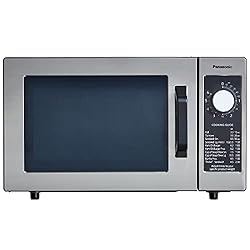
This Panasonic model is a stylish and slick microwave oven with easy to grab door handle and a stainless steel front. It is a high quality, easy to clean, easy to use and features everything a microwave without a glass plate should have.

This heavy-duty oven is commercial grade. It is able to withstand high-volume usage, which make it a great choice for those who frequently use the microwave.

The bottom energy and the no-plate design help maximize the efficiency in cooking by minimizing the distance covered by the microwave beams to reach the food. This makes it cook food quicker than other brands. The no-plate design also makes it easy to clean and less sloshing of food.

The controls on Panasonic Consumer NE1025F are well thought out and easy to use. You do not have to keep pressing a button to get to your desired settings; you can simply use the dial knob, which allows easy selection of the cooking time.

>> Check Price on Amazon <<


2. Sharp R-21LCFS Commercial Microwave
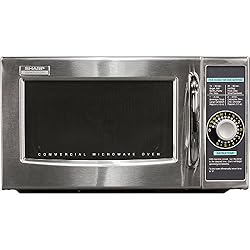
With a stainless steel exterior wrap and interior, this microwave oven is easy to clean and maintain he shiny appearance. This 1000- watts microwave from sharp boasts a 1.0 cubic foot vole capacity, meaning it can cope a 13-; 1/2” platter, single servings a half sized pan or even prepackaged foods.

 This microwave oven without a plate features easy to read dial controls, which makes it easier to set the cooking time. The dials are even big enough for old people and people with eyesight problems to see.

This commercial microwave oven even comes equipped with an auto-cancel feature. Whenever the door is open while running, the remaining time in canceled. This helps save energy as well as lengthens the microwave ovens life.

>> Check Price on Amazon <<


3. Amana RMS10DS Light-Duty Commercial Microwave

If you are in the market for a plate less microwave that is simple and easy to navigate, then look no further than the Amana RMS10DS Light-Duty Commercial Microwave (see Amazon). It features straightforward dial controls, which allow you to set the time between the ranges of 5 seconds to 6 minutes.

 Since it has no glass table, this microwave is able to heat the food quickly and evenly. It may be small in size (a mere 0.8- cubic foot) the microwave still has enough space to fit a 12” patter single servings and prepackaged foods.

 With a stainless steel exterior and interior wrap, the Amana RMS10DS Light-Duty Commercial Microwave can match all the kitchen styles and allows easy cleaning and maintenance.

>> Check Price on Amazon <<


Related Questions

Is it Safe to Eat food From a Microwave that does not rotate?

Yes, it is safe to eat the food because purpose of the spinning is to ensure even cooking from all angles. The heat from the microwave beam heats the water molecules inside the food you place inside the oven.

Why do most commercial microwaves lack glass plates?

Many commercial microwave ovens do not retail with glass plates. Unlike the typical household microwave with a spinning plate, commercial microwaves are built to hold dishes that are too large to locate and higher quantities of food. These microwave ovens also have more even heat distribution, removing the need for a glass plate.

What makes the Microwave Glass plate not rotate?

If the glass plate inside your microwave oven does not turn, the first and most common reason is due to a broken drive motor. Many microwave brands are equipped with a round glass plate with a motor-driven coupler and roller guide, which moves the tray. 

When Debris is stuck there, it is likely to break the drive motor. You can fix the motor by first removing the circular glass plate guide and the glass tray, then getting rid of anything that might be stuck on it.

See Also:
4 Top Microwaves For Seeing Impaired
Can You Put A Metal Bowl In A Microwave

Can You Use a Microwave Without the Glass Plate? Smart Kitchen Tips

Ever looked at your microwave, realized the glass plate’s missing, and wondered if you can still zap your leftovers? Technically, you can use your microwave without the glass plate, but honestly, it’s not great for your food or your appliance.

Without that plate, food heats up weirdly, messes get way worse, and you might end up shortening your microwave’s life. It’s one of those things that seems harmless until you deal with the aftermath.

A modern microwave oven with its glass plate removed, a hand reaching to use the controls in a kitchen setting.

If your glass plate broke or just vanished, don’t panic. There are workarounds that’ll keep your meals decent and your microwave from taking a beating.

Knowing what actually happens inside your microwave helps a lot. You’ll avoid headaches and maybe save dinner from disaster. It’s not rocket science, but a few small tips make a big difference.

Key Takeways

  • Microwaving without the glass plate messes with how your food heats up and can get messy fast.
  • There are safe swaps for the plate that’ll help keep things tidy and your food better cooked.
  • Taking care of your microwave means better meals and a longer-lasting appliance.

Why Microwaves Have a Glass Plate

The glass plate isn’t there just for show—it’s a big deal for even heating. It works with the microwave’s inner parts to help your food cook evenly, so you don’t end up with frozen middles or scorched edges.

The Purpose of the Turntable

The turntable (yep, that glass plate) spins your food around. This simple rotation lets the microwave energy hit your food from all sides.

Think of it like a lazy Susan at a busy dinner table. When the plate turns, every bite gets a fair shot at the heat. If you ditch the plate, you’ll have to rotate or stir the food yourself, or risk those dreaded cold spots.

Having the plate do the work saves you time and keeps things hands-off. Without it, you’re suddenly way more involved in the process than you wanted to be.

How Microwaves Distribute Heat

Microwaves cook by zapping water molecules in your food, but the waves don’t exactly spread out in a perfect pattern. That’s why you sometimes get those weird hot and cold patches.

The spinning glass plate helps by moving your dish through different parts of the microwave’s energy field. So, instead of one spot getting all the heat, the plate spreads things around.

If your food just sits still, some areas get cooked way more than others. That’s when you get half-burnt, half-raw meals. The plate really does the heavy lifting to keep that from happening.

The Role of the Magnetron

The magnetron is the part that actually makes the microwaves. It shoots energy into the chamber, and the glass plate rotates your food so the waves hit it from all angles.

Without that rotation, the microwaves can pile up in one spot, which isn’t great for your food or the machine. The magnetron counts on the plate to help move things along safely.

Once you get how these pieces fit together, you realize why the glass plate matters. If you want a deep dive into using your microwave without the plate, check out this guide: using a microwave without the glass plate.

What Happens If You Use a Microwave Without the Glass Plate

If you skip the glass plate, the way your food heats up changes. You’ll probably notice your meal comes out uneven, sometimes weirdly cold in the middle or too hot at the edges.

Uneven Heating Risks

Since the plate isn’t spinning your food, the microwaves just blast certain areas. That means you get hot spots and cold patches, especially with thicker foods like soups or casseroles.

Cold spots can be a health risk if your food doesn’t get hot enough to kill bacteria. Plus, biting into a half-cold, half-boiling meal is just not fun.

To fix this, you’ll have to stop the microwave and stir or turn your food a lot more than usual. It’s a bit of a hassle, but it’s better than eating undercooked leftovers.

Potential for Undercooked and Overcooked Food

No plate means some parts of your meal might stay raw while others get nuked. Not ideal, especially with meat or frozen dinners.

Overcooked spots can get dry and weirdly chewy, while the undercooked bits might still be cold. Getting it just right is tricky without the plate.

You’ll probably find yourself pausing the microwave more often, checking, stirring, maybe even microwaving in shorter bursts. It’s doable, but definitely not as easy as just letting the plate do its thing.

Using containers that spread food out and covering your dish can help a bit. Still, you’ll want to keep an eye on things so you don’t end up with burnt edges or icy centers.

Curious about more microwave hacks? Here’s a guide on microwave safety and heating efficiency.

Safe Alternatives to the Glass Plate

A microwave oven with its door open showing no glass plate inside, surrounded by microwave-safe plates and containers on a kitchen countertop.

No glass plate? You’re not totally out of luck. The trick is picking the right dish and being a little more hands-on with your cooking.

Using Microwave-Safe Dishes

Grab a microwave-safe dish—ceramic, glass, or sturdy plastic usually works. These help keep your food steady and protect the inside of your microwave from spills.

Look for that “microwave-safe” label to avoid melted plastic or weird chemicals. Shallow dishes are your friend; they heat food more evenly and don’t splatter as much.

Cover your food with a microwave-safe lid or a plate to keep things from drying out and making a mess. Make sure the dish fits well so it doesn’t slide around. That’s one less thing to worry about.

Manual Rotation and Cooking Tips

Since your food won’t turn on its own, you’ll need to pause the microwave and give your dish a turn or a stir every minute or so. It’s not hard, just a bit more hands-on.

Use shorter bursts of cooking time so you can check and stir as you go. If you’re heating soup or pasta, stirring is pretty much essential. It helps everything heat up evenly.

Don’t put food straight on the microwave floor. Use a dish, or if you have one, a silicone mat for stability. Keep an eye on things so nothing boils over or burns.

With these tricks, you can get by without the glass plate and still end up with a decent meal.

Need more on safe containers? Here’s a quick guide to picking a microwave-safe dish.

Situations Where You Might Consider Going Without the Plate

Open microwave oven interior without the glass plate, showing the rotating mechanism inside.

Sometimes, the plate just isn’t there. Maybe it broke, or maybe you’re trying to fit in a dish that’s way too big for it. Either way, you can still make things work if you’re careful.

When the Plate Is Broken or Missing

If the glass plate’s broken or gone missing, it’s annoying, but not the end of the world. You can still microwave food, but you’ll need to take a few extra steps.

Don’t put food directly on the microwave floor—it gets messy fast. Use a microwave-safe container or a silicone mat to keep things stable and protect the inside of your microwave.

Cover your food to stop splatters, and remember to stir or rotate it by hand since the plate isn’t turning for you. It’s a bit more work, but it gets the job done.

Cooking with Larger or Odd-Shaped Dishes

Ever tried to microwave a giant casserole dish or something with a weird shape? Sometimes, it just won’t fit on the plate, so you have to take it out.

Make sure whatever you use is microwave-safe and sits flat so it doesn’t tip over. Since the dish won’t spin, use a lower power setting and stop to stir or check on your food more often.

This way works, but you’ve got to pay attention. It’s a little more effort, but it lets you heat up big or awkwardly shaped dishes without too much trouble. For extra tips, check out this guide on microwaving without a glass plate.

Health and Safety Considerations

A microwave oven with its door open showing the interior without a glass plate on a kitchen countertop with fresh vegetables nearby.

Running your microwave without the glass plate means you need to pay extra attention to how you cook and clean up. Handling food properly keeps things safe, and cleaning up spills right away helps your microwave last longer.

Food Safety Precautions

Skip the glass plate, and your food might heat unevenly. Those hotspots and cold spots can leave parts of your meal undercooked, and that’s risky since bacteria might survive.

Use microwave-safe containers and cover your food to help it heat more evenly. Always check your food’s temperature after microwaving, just to be sure you don’t bite into anything cold in the middle.

Try stirring or rotating your food halfway through, especially if the glass plate’s missing. Never put food directly on the microwave floor—spills can damage the appliance or even start a fire.

Keep your food contained to avoid mess and make sure your meal’s actually safe to eat.

Cleaning and Maintaining Your Microwave

If you’re running the microwave without its glass plate, spills and splatters go right onto the floor. That makes cleaning crucial.

Food debris burns fast or makes smoke if you leave it, so scrape or wipe up spills right after you finish. Use a damp cloth or microwave-safe cleaners to remove stains, and skip harsh chemicals that might mess up the inside.

Check the microwave every so often for damage, especially near the heating element if food’s been touching it. For easier cleanup, toss in a silicone mat or use microwave-safe dishes—they catch drips and stop buildup.

These habits help keep your microwave working well for the next round. If you’re curious about safe microwave use without a glass plate, there’s more at microwaveshub.com.

How to Replace a Broken Glass Plate

Hands holding a clean glass microwave plate next to a broken glass plate on a kitchen countertop with a microwave in the background.

Replacing a broken glass plate in your microwave isn’t as tough as it sounds. You just need a replacement that fits perfectly and works with your microwave’s turntable system.

Knowing where to look and what to check saves you from mistakes and keeps your microwave running smoothly.

Finding the Right Replacement

First, check your microwave’s model number—it’s usually on a label inside the door or on the back. That number helps you find glass plates made for your specific appliance.

Most brands sell exact matches with the right size, shape, and even the center ring or support parts. Measure the diameter of your broken plate before you shop, whether you’re searching online or in-store.

Plates are usually round, but thickness and the hub design matter too. Don’t guess—an off-size plate can wobble or spin badly, which is just asking for trouble.

You want a stable, smooth fit to avoid damage and get even cooking.

Universal and Compatible Parts

If you can’t find an exact match, try looking for universal microwave turntable plates. These usually have adjustable or standard-size center hubs that fit many microwaves, so you just need to pick a size that fits your turntable area.

Universal plates are tempered glass and handle heat like the originals, but make sure you get one labeled microwave-safe. Double-check the weight too—too heavy, and your microwave’s motor could struggle.

Test that the plate spins freely on the support ring, and make sure the motor isn’t overloaded by the new plate’s size or weight. Spending a few minutes on this means safer, even heating every time.

Want more details? Here’s a guide on safely replacing a broken plate if you need it.

Frequently Asked Questions

A modern kitchen with an open microwave oven without the glass plate inside and a hand placing a bowl into it.

Using your microwave without the original glass plate takes a bit of extra care. You’ll want to know your options if your plate’s missing or damaged, and it’s handy to know where to find a replacement or what to do if cracks show up.

How can you keep the magic going when microwaving without the original plate?

If you don’t have the glass plate, pause the microwave now and then and turn your food by hand. That helps it heat more evenly.

Microwave-safe dishes can help spread heat, too. Covering your food keeps splatters down and locks in moisture.

What creative alternatives exist for a microwave’s glass plate?

You’ve got options like microwave-safe ceramic bowls, BPA-free plastic containers, or silicone mats. These resist heat and help keep messes under control.

Silicone mats are a personal favorite—they’re non-stick, easy to clean, and don’t mind high temps.

What should you consider before using a microwave with a chip or crack in the plate?

A cracked plate might break more during heating, and that’s dangerous. If the crack looks bad, just don’t risk it.

Better to replace the plate or use a good container than deal with an accident.

Can the absence of a turntable affect your microwave’s performance?

No turntable means your food won’t heat evenly—expect cold spots or some parts getting too hot. The microwave’s designed to rotate food for a reason.

You’ll probably need to stop a few times and stir or turn your meal by hand.

Where can you find your next perfect glass plate for your microwave?

Check your microwave’s brand website or reliable appliance parts stores online. Most offer exact replacements by model number.

Some general parts stores carry universal plates that fit a bunch of different microwaves, so you’ve got options.

What are the first steps to take when your microwave’s glass plate breaks?

Start by picking up any shards with care—nobody wants a cut. Wipe down the microwave floor so there’s no sneaky debris left behind.

While you wait for a replacement plate, grab a microwave-safe dish or mat to use instead. Keep an eye on your food as it cooks; things might heat a little differently without that trusty glass plate.

Scroll to Top